Help your child memorise the Qur’an easier, faster and for life.
One payment of $27. Lifetime access. No subscription.
The system I built for my own daughter, ready for your family to follow at home.
They sit down every evening.
The pages still do not stay.
The evening begins with “Time to sit down.”
Your child says the same line again and again. Today it sounds right. Tomorrow it is gone.
Everyone is trying hard. The sessions get longer. The mood gets heavier. And you wonder if you are doing enough.
Then you raise your voice. Guilt hits hard. You whisper a promise that tomorrow will be different.
You want more than a finished page.
You want a child who sits down without being pushed. Who enjoys the Qur’an instead of dreading it. Who keeps what they memorise, long after the session ends.
A child whose heart grows closer to the Qur’an, who finishes with confidence, and who keeps it for life.
That was what I wanted for my own daughter.
And the change began when I stopped asking her to try harder.
I was pouring eight seconds into a two second cup.
Dear parent,
السلام عليكم ورحمة الله وبركاته
My daughter started memorising the Qur’an at seven. I did what most parents do. I found her a teacher. When she was slower than I expected, I asked for more: more revision, longer sessions, more focus. It did not work.
I had spent years studying the brain, and there I was at the kitchen table, telling my daughter to try harder, as if effort were the thing she was short of. And I was a doctor.
So I stopped. I went back to the research on how memory is built, and this time I read it as a father, not a doctor.
The first thing I found stopped me cold. The part of the brain that holds sound is small. Think of it as a cup. It holds about two seconds of speech. One line of the Qur’an takes about eight seconds to recite.
Every night, for months, I had been pouring eight seconds into a two second cup. Her brain was not failing. The pieces were too big for it.
Then I asked a different question. Not “Why won’t she try harder?” But:
“What can her brain actually hold?”
So I rebuilt the whole thing around what her brain could really do. Smaller pieces. A different order. A different hour of the day.
Within weeks, I was watching a different child. Not a harder working one. An easier one. She sat down without being asked. She stopped saying she was bad at this. And the pages started staying.
If this sounds like your evenings, you may have blamed yourself, or your child. Lazy, distracted, not trying. Neither is true. Most of us were never taught how memory works. I was not either, until I went looking.
I did not change my daughter. I changed the way she memorised the Qur’an, to match the way the brain works.
So I wrote down everything that worked, shaped it into practical cards, and joined them into one daily system.
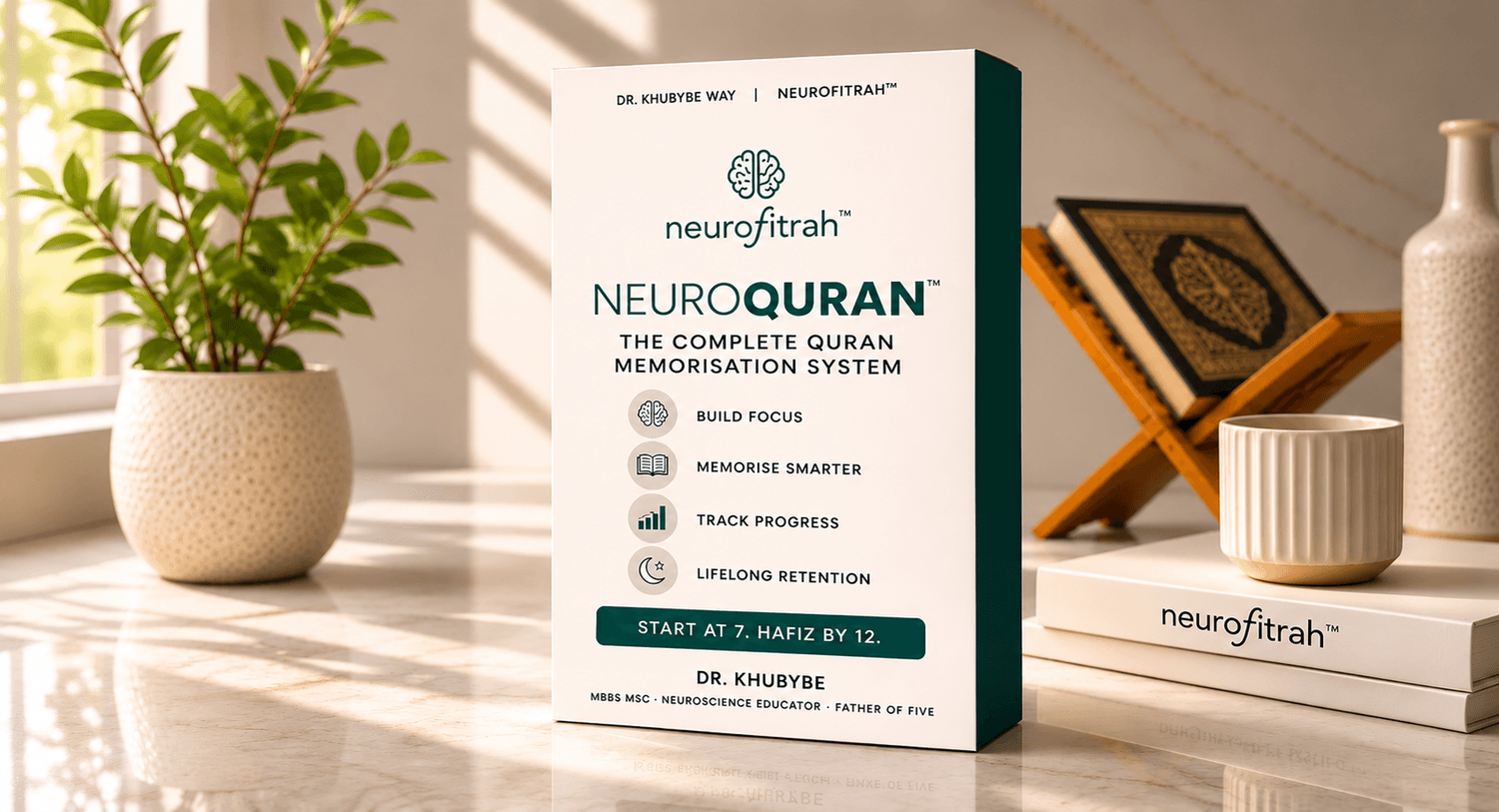
That system became NeuroQuran™.
Created so your child can carry the Qur’an for life, one small piece at a time.
From our family to yours,
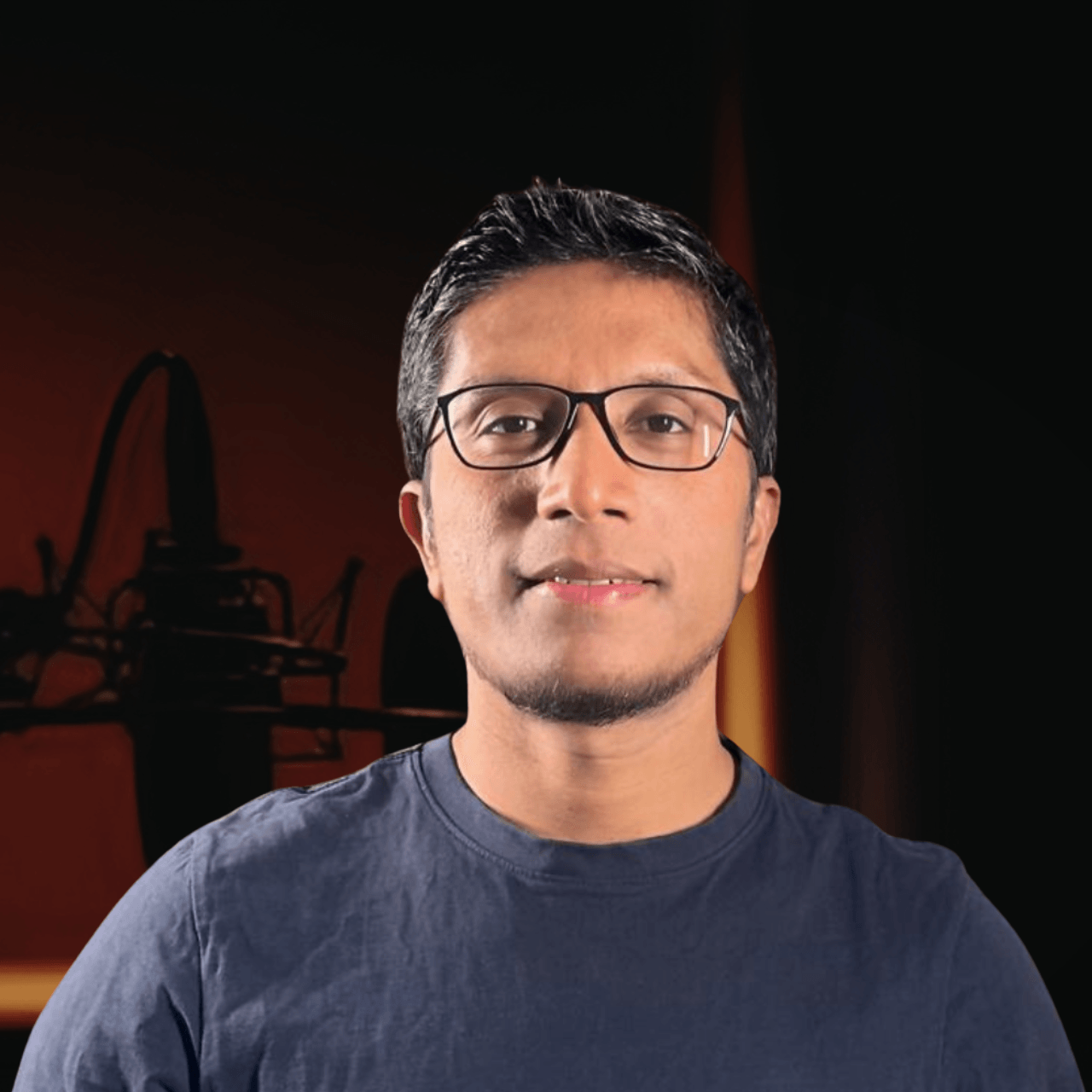
Dr. Khubybe
MBBS, MSc · Neuroscience Educator · Father of Five
Here is how the system fits together.
Fit the method to the brain. Then the pages stay.
Your child is not short of effort.
These are six simple facts about how a young brain memorises. None of them say your child is not clever enough. Each one tells us what to do, and NeuroQuran™ has a card that does it.
The brain holds about 2 seconds of sound at once. One line of the Qur’an takes about 8 seconds to recite.
Strange sounds take more room in the brain. Words your child already understands are much easier to keep.
Reading the page again feels easy, but it builds very little. Saying it without looking feels harder, and that is what makes it stay.
Attention is like a candle. It burns down. A real break lights it again.
Deep sleep moves the page from short-term to long-term memory.
Self-belief does not come from pictures of the finish. It comes from doing it and seeing it hold.
Less nagging. More pages that stay.
More peace in your evening.
The Qur’an ends up in your child’s heart, not on a checklist.
Everything inside. One complete system.
Every card answers one question: what do we do tonight?
One payment of $27. Lifetime access. No subscription.
Day 1 takes effort. By Day 40, it runs itself.
The 42 days do not memorise the Qur’an. They install the system that will.
Two days to prepare, then forty days to settle in. Each week, one more part of the system comes alive.
After Day 40, nothing changes. Same evening. One page at a time.
Your child does not start again.
Every page they already know comes with you.
Your child may already know some pages. Or they may have taken a long break. A special guide brings every page into the system, with no test day and no starting over.
Everything starts amber. Six weeks sorts it.
Families around the world are using it at home.
Clearer evenings. Calmer support.
Start tonight. Keep it for life.
Everything your family needs, in one place.
Try NeuroQuran™ for six weeks.
Follow the plan as written. If it does not help, you get your money back.
Use the tools every evening and write down what you see. If you do not see meaningful positive changes in your child’s evenings, focus or memorising, email us at the end of the six weeks at contact@drkhubybe.com and ask for a full refund.
Questions parents ask me.
What age is it for?+
Does my child need to read Arabic first?+
How long does each evening take?+
Does it work with my child’s teacher?+
Is it for daughters too?+
What if my child has already started, or we miss days?+
Do we need NeuroFitrah™ to use it?+
Is there a subscription?+
Help your child memorise the Qur’an easier, faster and for life.
Support your child’s drive, clarity, focus, memory, calm and stamina for extraordinary performance at school▪at home▪at sports▪in all endeavours
One payment of $27. Lifetime access. No subscription.
The system I built for my own daughter, ready for your family to follow at home.
They sit down every evening.
The pages still do not stay.
The evening begins with “Time to sit down.”
Your child says the same line again and again. Today it sounds right. Tomorrow it is gone.
Everyone is trying hard. The sessions get longer. The mood gets heavier. And you wonder if you are doing enough.
Then you raise your voice. Guilt hits hard. You whisper a promise that tomorrow will be different.
You want more than a finished page.
You want a child who sits down without being pushed. Who enjoys the Qur’an instead of dreading it. Who keeps what they memorise, long after the session ends.
A child whose heart grows closer to the Qur’an, who finishes with confidence, and who keeps it for life.
That was what I wanted for my own daughter.
And the change began when I stopped asking her to try harder.
I was pouring eight seconds into a two second cup.
Dear parent,
السلام عليكم ورحمة الله وبركاته
My daughter started memorising the Qur’an at seven. I did what most parents do. I found her a teacher. When she was slower than I expected, I asked for more: more revision, longer sessions, more focus. It did not work.
I had spent years studying the brain, and there I was at the kitchen table, telling my daughter to try harder, as if effort were the thing she was short of. And I was a doctor.
So I stopped. I went back to the research on how memory is built, and this time I read it as a father, not a doctor.
The first thing I found stopped me cold. The part of the brain that holds sound is small. Think of it as a cup. It holds about two seconds of speech. One line of the Qur’an takes about eight seconds to recite.
Every night, for months, I had been pouring eight seconds into a two second cup. Her brain was not failing. The pieces were too big for it.
Then I asked a different question. Not “Why won’t she try harder?” But:
“What can her brain actually hold?”
So I rebuilt the whole thing around what her brain could really do. Smaller pieces. A different order. A different hour of the day.
Within weeks, I was watching a different child. Not a harder working one. An easier one. She sat down without being asked. She stopped saying she was bad at this. And the pages started staying.
If this sounds like your evenings, you may have blamed yourself, or your child. Lazy, distracted, not trying. Neither is true. Most of us were never taught how memory works. I was not either, until I went looking.
I did not change my daughter. I changed the way she memorised the Qur’an, to match the way the brain works.
So I wrote down everything that worked, shaped it into practical cards, and joined them into one daily system.
That system became NeuroQuran™.
Created so your child can carry the Qur’an for life, one small piece at a time.
From our family to yours,
Dr. Khubybe
MBBS, MSc · Neuroscience Educator · Father of Five
Here is how the system fits together.
Fit the method to the brain. Then the pages stay.
Your child is not short of effort.
These are six simple facts about how a young brain memorises. None of them say your child is not clever enough. Each one tells us what to do, and NeuroQuran™ has a card that does it.
The brain holds about 2 seconds of sound at once. One line of the Qur’an takes about 8 seconds to recite.
Strange sounds take more room in the brain. Words your child already understands are much easier to keep.
Reading the page again feels easy, but it builds very little. Saying it without looking feels harder, and that is what makes it stay.
Attention is like a candle. It burns down. A real break lights it again.
Deep sleep moves the page from short-term to long-term memory.
Self-belief does not come from pictures of the finish. It comes from doing it and seeing it hold.
Less nagging. More pages that stay.
More peace in your evening.
The Qur’an ends up in your child’s heart, not on a checklist.
Everything inside. One complete system.
Every card answers one question: what do we do tonight?
One payment of $27. Lifetime access. No subscription.
Day 1 takes effort. By Day 40, it runs itself.
The 42 days do not memorise the Qur’an. They install the system that will.
Two days to prepare, then forty days to settle in. Each week, one more part of the system comes alive.
After Day 40, nothing changes. Same evening. One page at a time.
Your child does not start again.
Every page they already know comes with you.
Your child may already know some pages. Or they may have taken a long break. A special guide brings every page into the system, with no test day and no starting over.
Everything starts amber. Six weeks sorts it.
Families around the world are using it at home.
Clearer evenings. Calmer support.
Start tonight. Keep it for life.
Everything your family needs, in one place.
Try NeuroQuran™ for six weeks.
Follow the plan as written. If it does not help, you get your money back.
Use the tools every evening and write down what you see. If you do not see meaningful positive changes in your child’s evenings, focus or memorising, email us at the end of the six weeks at contact@drkhubybe.com and ask for a full refund.
Questions parents ask me.
What age is it for?+
Does my child need to read Arabic first?+
How long does each evening take?+
Does it work with my child’s teacher?+
Is it for daughters too?+
What if my child has already started, or we miss days?+
Do we need NeuroFitrah™ to use it?+
Is there a subscription?+